
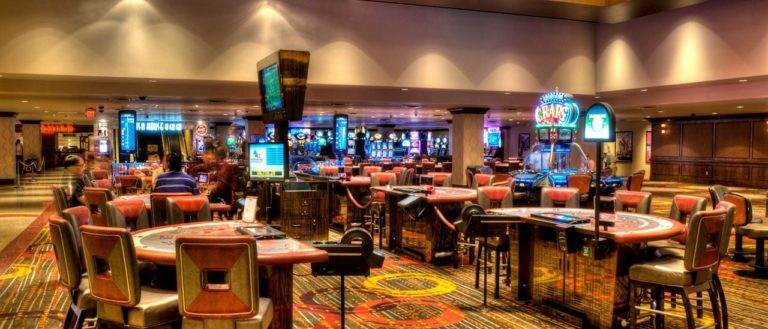
Approaching a roulette table for the very first time can seem like stepping into a scene from a classic film, and no version captures that elegance as well as French Roulette. I still think back to my own initial days at Casinochan Casino, observing the wheel rotate and listening to the soft click of the ivory ball, curious what made this specific layout dissimilar from the American tables I had seen before. The reality is that French Roulette offers notable mathematical advantages and special betting rituals that any Canadian player should grasp before making real wagers. This guide guides you through the full experience, from the design of the wheel to the verbal announcements at the table, so you can approach the game with true confidence rather than trusting luck alone.
Bankroll Management and Essential Etiquette for the French Roulette Layout
Entering any roulette round without a clear bankroll approach is the surest way to convert entertainment into frustration, and French Roulette’s advantageous odds do not free you from strict money management. I suggest setting a session budget before you load the game and splitting it into betting units that constitute roughly one to two percent of your total. If you come with $200, for example, using $2 as your base unit gives you 100 units to work with, enabling plenty of room to absorb the natural variance of the game without exhausting your funds during a cold streak. Even-money gamblers enjoying the 1.35% house edge can maintain longer sessions on the same bankroll compared to inside-number players, but regardless of your approach, a predetermined loss limit and a win target—say, leaving when you are up 30%—protect you from the common trap of returning profits during an overconfident run.
Etiquette in live dealer French Roulette is simpler than in physical casinos but still is important. Arrive to the table before placing bets to check the current round, set your chips decisively before the dealer calls “rien ne va plus” (no more bets), and avoid commenting critically on other players’ wagering choices. In software-based games, etiquette carries over to handling your pace responsibly and not permitting rapid auto-spin features separate you from your bankroll awareness. At Casinochan Casino, responsible gaming tools such as deposit limits, session timers, and self-exclusion options are accessible directly from your account dashboard. I regard these tools crucial companions to any roulette strategy, because the game’s elegance can be so captivating that time and expenditure pass by unnoticed without external guardrails.
The Architecture of the French Roulette Wheel Layout and Table
French Roulette uses the single-zero European wheel, which has 37 numbered pockets running from 0 to 36. The zero pocket sits at the top of the wheel, colored green, while the remaining numbers switch between red and black in a precisely crafted sequence intended to distribute high and low numbers, odd and even values, and colour distribution across the full circumference. When you look at the betting layout on a French table, you will see something immediately different from American versions: the table is elongated, and the outside bets are divided symmetrically along both sides of the number grid. This dual-sided arrangement lets more players to get to the felt comfortably without crowding a single section, which is one aspect French Roulette feels more roomy and polished in live dealer settings at Casinochan Casino.
Another distinctive element is that the French table typically presents the betting terms in French, even when the dealer communicates in English. You will see inscriptions such as “Manque” for low numbers 1 through 18, “Passe” for high numbers 19 through 36, “Pair” for even, and “Impair” for odd. The dozen bets show up as “Première Douzaine” for the first dozen, “Moyenne Douzaine” for the second, and “Dernière Douzaine” for the third. Knowing these labels before you join removes the initial confusion many players experience. The numbers themselves are laid out in three columns of twelve, and the zero sits alone at the head of the layout, visibly separated from the main grid to indicate everyone of its special role in house edge calculations.
The Track and Called Bets Exclusive to French Roulette
The wheel sector, or “voisins” betting area, is a dedicated oval-shaped section of the layout that reflects the physical order of numbers on the wheel rather than their sequential arrangement on the grid. This feature is almost exclusive to French Roulette and provides players direct access to wheel-sector bets that would otherwise require placing multiple individual chips. The most famous of these is “Voisins du Zéro,” or neighbours of zero, which includes 17 numbers spanning from 22 through 25 on the wheel, including the zero itself. Executing this bet manually would involve nine separate chip placements, but the racetrack condenses it to a single announcement or a single click in the software interface.
Other classic announced bets comprise “Tiers du Cylindre,” covering the 12 numbers opposite the zero sector from 27 through 33 on the wheel, and “Orphelins,” which covers the two small groups of numbers not included in either the Voisins or Tiers sectors. The “Jeu Zéro” bet is a narrower variant including just seven numbers clustered around the zero. Each announced bet needs a fixed total stake divided across the constituent numbers according to a traditional formula. As an illustration, a typical Voisins du Zéro wager at €9 total might allocate €2 on the 0-2-3 trio, €1 each on five specific splits, and €1 on a corner. Understanding these standardised divisions enables you appreciate why French Roulette seems more sophisticated than its simpler cousins. Casinochan Casino offers racetrack betting in its live dealer rooms, and the interface clearly indicates which chips go where after you select an announced bet.
Inside Wagers and the French Naming Rules
French Roulette features a lexicon of bet names that appear elegant to the uninitiated ear but describe specific chip placements on the number grid. A straight-up bet on a single number is called “En Plein,” and it offers 35 to 1, exactly as it does in all other roulette variants. the complete picture Placing your chip on the line between two adjacent numbers, either horizontally or vertically, creates a split bet referred to as “Cheval,” which pays 17 to 1. When you wish to cover three numbers in a horizontal row, you put your chip on the outer boundary line of that row for a “Transversale Pleine,” or street bet, paying 11 to 1. These terms show up regularly in French Roulette tutorials, and learning them assists you follow strategy discussions without always translating in your head.
The corner bet that encompasses four numbers meeting at a single intersection is known as “Carré,” providing an 8 to 1 payout, while a six-number bet spanning two adjacent rows is a “Sixain,” giving 5 to 1. The French terminology reaches to the racetrack section of the layout as well, which we cover later, but even on the main grid, overhearing a dealer call “Cheval” or “Carré” brings to the engaging atmosphere of the game. I suggest trying these bets in free-play mode at Casinochan Casino before risking real money, because the physical placement of chips demands precision, and software interfaces sometimes employ slightly different gestures for each bet type. Perfecting the correct placements ensures you never accidentally cover the wrong numbers during a fast-paced session.
FAQ
How is French Roulette different from European Roulette?
French Roulette uses the same single-zero wheel with 37 pockets as European Roulette, so the core mechanics stay unchanged. The differences stem from the table layout, which arranges outside bets symmetrically on both sides, the employment of French terminology for bet names, and above all, the La Partage and En Prison rules. These special rules reduce the house edge on even-money bets from 2.70% to 1.35%, a advantage that standard European tables rarely offer unless explicitly stated. The racetrack betting area for announced bets is more commonly found in French variants.
Is it correct that French Roulette more advantageous for players than American Roulette?
Yes, and the advantage is strictly mathematical. American Roulette includes a double-zero pocket, taking the total to 38 numbers and pushing the standard house edge to 5.26%, nearly double the 2.70% base edge of French Roulette. When La Partage or En Prison applies on even-money bets, the French edge decreases further to 1.35%, representing roughly one-quarter of the American rate. Over several hours of play, that difference translates directly into how long your bankroll lasts. I consistently guide Canadian players toward single-zero French or European tables.
Is it possible to play French Roulette for free before risking real money?
Without a doubt, and I highly recommend it. Casinochan Casino features free-play demo versions of French Roulette that enable you to discover the layout, try out bet placements, and test strategies without wagering a dollar. The demo tables run on the identical random number generation principles as the real-money versions, so the statistical patterns you notice will be typical. Once you are at ease with the racetrack bets, the French terminology, and the pace of the game, transitioning to real-money mode takes just a moment from your account dashboard.
Are La Partage and En Prison rules apply to all bets?
No, and this is a key point that new players often miss. Both La Partage and En Prison pertain exclusively to even-money outside bets: red/black, odd/even, and high/low. Inside bets such as straight-ups, splits, corners, and streets, as well as dozen and column bets, are not included by these favourable rules. If the zero comes up and you have money on a corner bet, for example, you give up the full stake. This limitation forms a strategic incentive to weight your wagering toward even-money options if maximum bankroll preservation is your objective.
Which is the best bet to place as a complete beginner?
I suggest beginning only with even-money outside bets on a La Partage table. Putting equal units on red or black, or optionally on odd or even, maintains the game simple while offering you the lowest possible house edge at 1.35%. You will win slightly less than half your spins over time, but the half-refund on zeros evens the losing streaks enough to maintain the experience enjoyable. As you build confidence, gradually introduce a single dozen or column bet alongside your even-money wager to experience how combination coverage works without burdening yourself with chip management.
What is the way to place announced bets like Voisins du Zéro online?
In the Casinochan Casino interface, locate the racetrack section displayed beside the main betting grid. Selecting on one of the labelled sectors—Voisins, Tiers, Orphelins, or Jeu Zéro—automatically places the entire complex bet using the standard chip distribution for that wager. The software highlights exactly which positions receive chips so you can verify the placement before the spin begins. In live dealer games, you can typically choose announced bets from a dedicated menu, and the digital overlay manages the rest while the croupier recognizes your wager verbally.
Am I able to use the same roulette strategy on mobile as on desktop?
Yes, all betting options present on the desktop version of French Roulette at Casinochan Casino carry over seamlessly to mobile devices. The touch interface actually makes certain actions quicker, such as dragging chips onto specific numbers and gliding to view the ring. The one consideration is screen real estate; I suggest playing in landscape orientation on phones to give the wheel and the full betting grid enough space to display clearly without requiring constant zooming or scrolling. Strategy-wise, everything from progressive systems to flat betting works identically across platforms.
Side Bets, Dozen Bets, and Column Strategies for Consistent Play
External wagers in French Roulette represent the core of cautious approaches crafted to produce consistent small wins as opposed to rare large payouts. The 1-to-1 bets we already mentioned—rouge et noir, pair et impair, manque et passe—provide the most stable path through any session, particularly when La Partage or En Prison is active. Beyond these, the dozen and column wagers offer you approximately one-third coverage of the betting layout while returning 2 to 1. The three dozens are designated P12, M12, and D12 on many software interfaces, aligning with numbers 1-12, 13-24, and 25-36 accordingly. The three columns pay the same and cover numbers laid out in columns instead of sequentially.
What numerous beginners fail to notice is that mixed bets utilizing one dozen along with a column can create overlapping coverage zones on the layout. For example, putting equal wagers on the first dozen and the middle column covers 20 unique numbers, counting the crossing at numbers 2, 5, 8, and 11. This approach compromises some payout efficiency in return for landing victorious numbers more regularly, which can help newer players build comfort with the flow of the game. I believe that alternating between straight external wagers and these combined layouts preserves sessions interesting without subjecting your budget to the sharp drawdowns that straight-up betting can trigger. At Casinochan Casino, you can try these approaches at low minimum-stake tables until you find a arrangement that aligns with your personal risk tolerance.
The En Prison Rule and When to Employ It
En Prison represents a more theatrical relative to La Partage, offering the equivalent statistical edge but by a different mechanical approach. When the zero hits on an even-money stake under En Prison, the dealer does not immediately return half your stake. Alternatively, your chips remain on the table, symbolically “imprisoned” for the following spin. If your stake wins on that next spin, you recover your entire original stake but receive no additional profit. If it loses, you surrender the whole sum. In mathematical terms, this nonetheless lowers the house edge to 1.35% on even-money bets, the same as La Partage, but the experience is quite distinct because you must endure a further spin to find out your result.
I consider En Prison especially captivating for players who enjoy the narrative drama of roulette as opposed to fast outcomes. You obtain another chance as opposed to a certain half-refund, which could make the zero result less disappointing in the moment. However, En Prison needs a touch more concentration, because you must keep track of which bets are imprisoned and keep in mind that you cannot take back those chips until the subsequent result is determined. At Casinochan Casino, live casino tables often display which rule is in use in the game description, and some software-based versions let you choose between La Partage and En Prison in the settings menu. For strictly mathematical reasons, both are outstanding; your choice hinges on whether you like certainty or a second chance at recovery.
Payouts, Payouts, and the Actual House Edge in French Roulette
Every roulette variant carries a built-in advantage for the house, but French Roulette with La Partage or En Prison pushes that edge smaller than virtually any other casino game offered to Canadian players. On a typical single-zero wheel without the special rules, the house edge stands at 2.70%, meaning that over a lengthy series of spins, the casino aims to keep approximately $2.70 for every $100 wagered. When La Partage triggers on even-money bets, the actual edge on those certain wagers declines to 1.35%, as we described earlier. Inside bets and non-even-money outside bets still work at the 2.70% level, since the La Partage rule does not extend to them. This establishes a smart incentive to prefer even-money betting if longevity is your primary goal.

The payout structure itself is uniform across European and French wheels https://casinochancanada.ca/. A straight-up winner offers 35:1, a split pays out 17:1, a street gives 11:1, a corner pays 8:1, a six-line delivers 5:1, and dozens and columns each return 2:1. The zero plays no particular role in payouts except being a losing number for most bets, although some tables feature a “zero insurance” side bet that I advise against, as side bets nearly always have considerably higher house edges than the core game. I advise maintaining a simple payout chart handy during your initial few sessions at Casinochan Casino—either on a second screen or in your notes—until the ratios become second nature. Fast mental math avoids those uncomfortable moments of confusion when the dealer moves a stack of chips toward you and you are not sure whether the total is accurate.
How the La Partage Rule Alters Your Chances
If there is one characteristic that distinguishes French Roulette from all other versions, it is the La Partage rule, and I urge every new player to seek out tables that feature it. This rule pertains exclusively to even-money outside bets: red or black, odd or even, and high or low. When the ball stops in the zero pocket, a standard European table would simply collect all losing bets, including those even-money wagers. With La Partage, however, the house returns exactly half of your even-money stake rather than keeping the entire amount. This single mechanism reduces the house edge on those specific bets from 2.70% down to 1.35%, making French Roulette one of the most player-friendly casino games found anywhere in Canada.
To understand how this operates in reality, picture you place a $10 wager on red. The wheel spins, and the ball drops into the green zero. Instead of losing your full $10, the dealer moves $5 back across the felt to you, keeping the other half. Over hundreds of spins, that half-return makes a measurable difference to your bankroll longevity. Not every French Roulette table applies La Partage, so I always suggest checking the table rules shown in the game interface at Casinochan Casino before committing your chips. The alternative rule you might find is En Prison, which we will cover shortly, but La Partage remains the more straightforward of the two and the one I suggest beginners target first.
Enjoying French Roulette on Mobile and Desktop at Casinochan Casino
The software edition of French Roulette has developed to the point where it captures much of the physical enjoyment of the physical game while adding convenience that brick-and-mortar casinos cannot match. At Casinochan Casino, the software-based French Roulette tables load directly in your browser without needing downloads, and they scale smoothly to screen sizes spanning from large desktop monitors to standard smartphones. The interface places the wheel prominently in the upper portion of the screen with the betting grid below, and you choose chip denominations by tapping or clicking value icons before putting them on the layout. A clear bet-history panel shows recent winning numbers, which some players employ to shape pattern-based strategies, though I always advise newcomers that each spin is statistically independent of the last.
Live dealer French Roulette elevates the experience further by transmitting a real table from a professional studio, with a human croupier turning the wheel and calling results in real time. You put bets through a digital overlay while viewing the physical wheel via high-definition video, and a chat function enables you interact with the dealer and sometimes with other players. Mobile play works particularly well in landscape orientation, giving you a wide view of the table and clear access to all bet spots. I advise testing both the software and live versions to find out which rhythm matches you. Software tables enable you gamble faster and at lower minimums, while live tables provide the social atmosphere and the satisfying visual of a real ball spinning around a real wheel. Both formats accept the same range of payment methods offered across Casinochan Casino, including Interac, e-wallets, and credit cards, with Canadian dollar deposits appearing instantly in most cases.
